Slope 2 Guide
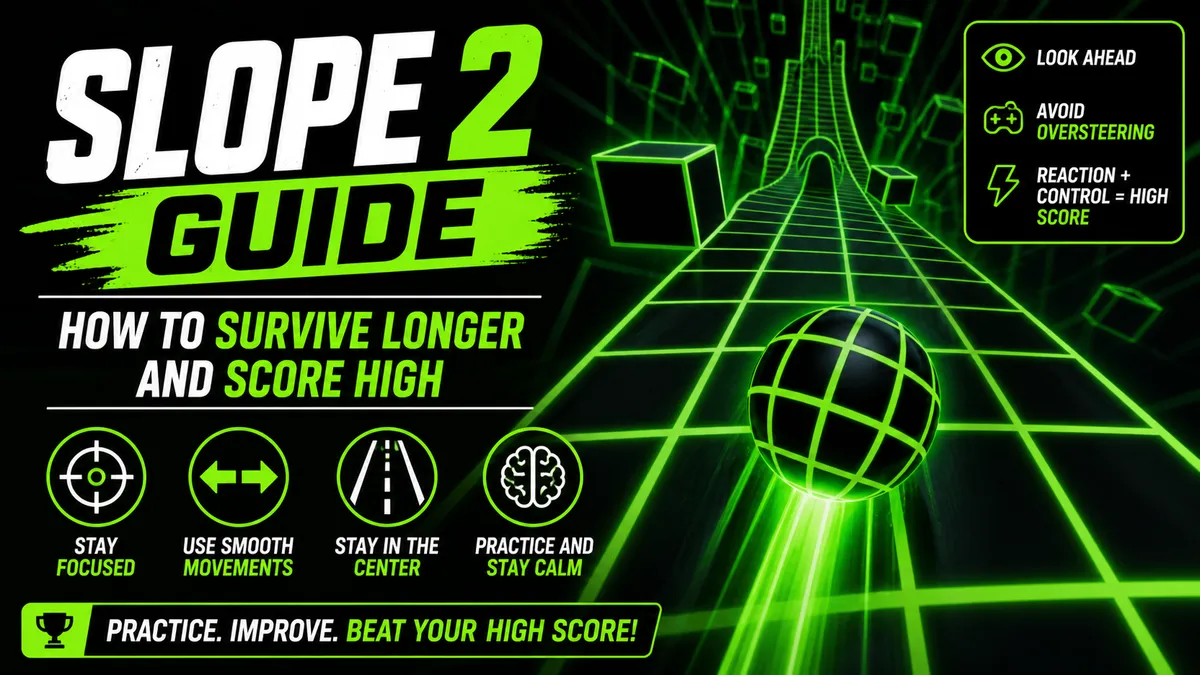
If you’ve ever played Slope 2, you know how quickly a calm run can spiral into an intense challenge. The game begins at a manageable pace, giving you just enough time to get comfortable with the controls. However, within moments, the speed ramps up, and obstacles start appearing more frequently, demanding quicker reactions. For many players, even lasting thirty seconds can feel like a real achievement in the beginning.
What makes Slope 2 so addictive is its simplicity combined with increasing difficulty. There are no complex mechanics to learn, yet the game constantly pushes your focus and reaction time to the limit. As you continue playing, you realize that success isn’t based on luck but on maintaining control, building consistency, and staying calm under pressure.
Understanding How the Game Works
At its core, Slope 2 is an endless runner where you control a rolling ball on a fast-moving 3D track. The objective is simple: stay on the platform, avoid obstacles, and survive as long as possible. The longer you last, the higher your score climbs.
However, the real challenge comes from how the game evolves. The speed gradually increases, the track becomes narrower, and unexpected turns or barriers force you to react instantly. There’s no pause button, no second chances, just continuous movement that demands your full attention.
Why Most Players Struggle Early
Many beginners assume the game is purely based on quick reflexes, but that’s only part of the story. One of the most common reasons players fail early is overreacting. When the ball starts moving faster, it’s natural to panic and make sharp movements. Unfortunately, these sudden corrections often push the ball off the track.
Another mistake is focusing only on the ball itself. While it might seem logical, this actually limits your ability to anticipate what’s coming next. By the time you see an obstacle, it’s often too late to react properly.
Understanding these common issues can help you avoid repeating them and improve faster.
Practical Tips to Improve Your Gameplay
Improving your performance doesn’t require complex strategies, but it does require awareness and practice.
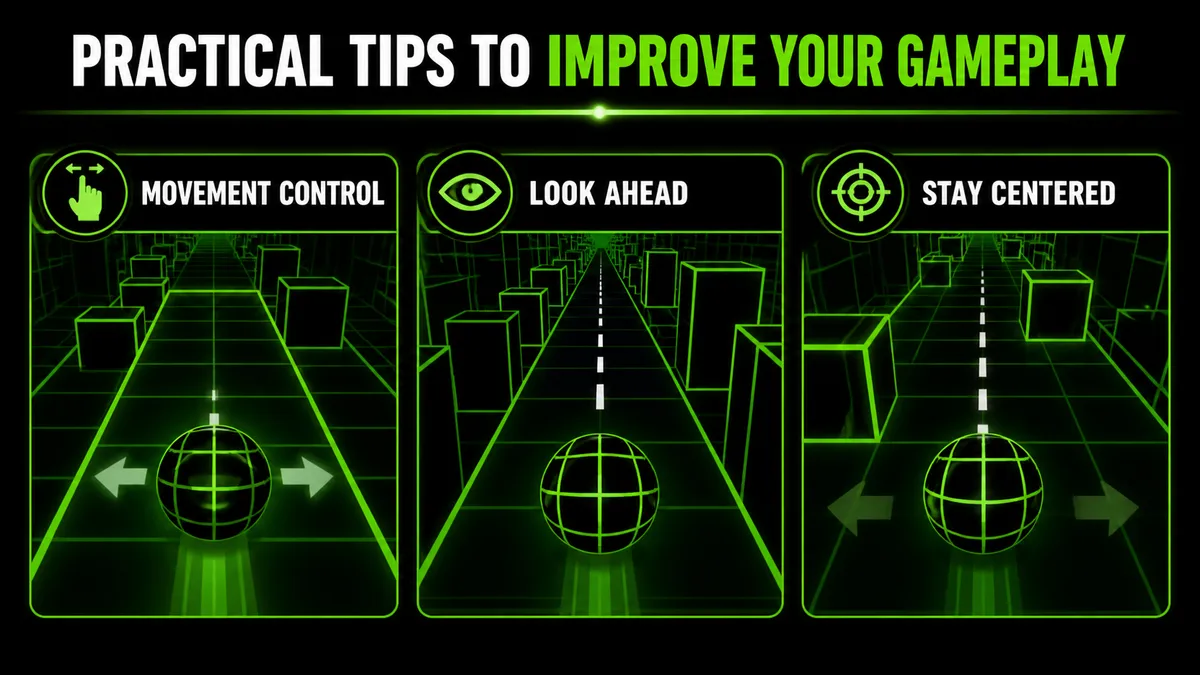
The first thing to focus on is movement control. Instead of making large, sudden shifts, try to guide the ball with small, steady adjustments. This helps maintain balance, especially at higher speeds where precision becomes more important than speed.
Another key tip is to shift your vision slightly ahead of the ball. By looking at the track a short distance in front of you, you give yourself more time to react. This small adjustment can make a big difference in how long you survive.
Positioning is equally important. Staying near the center of the track gives you more flexibility when obstacles appear. If you’re already close to the edge, even a small mistake can end your run instantly.
Building Rhythm Instead of Reacting
Rhythm is one of the most overlooked elements in gameplay, yet it plays a crucial role in improving performance. While the game may appear random initially, experienced players begin to recognize subtle patterns in movement and obstacle timing over time.
Instead of reacting to every situation separately, focus on building a consistent flow in your actions. Developing rhythm allows smoother decision-making, reduces hesitation, and helps the game feel more controlled, making challenges easier to handle without overthinking.
Advanced Strategies for Higher Scores
If your goal is to push beyond basic survival and achieve higher scores, you need to go a step further.
Advanced players rely heavily on anticipation. They don’t wait until an obstacle is directly in front of them; they prepare for it in advance. This forward-thinking approach reduces panic and allows for more controlled movement.
Another important factor is consistency training. While the game itself improves your control, practicing through similar skill-based experiences can accelerate your progress. You can explore comparable gameplay styles on platforms like browser-based skill games, where timing and movement control are equally important.
It’s also helpful to accept that mistakes will happen. Instead of getting frustrated, use each failed run as a learning opportunity. Over time, you’ll start recognizing patterns and reacting more naturally.
Improving Reaction Time and Focus

Reaction time is a key performance factor, especially as the game speed increases. With less time available to respond, players must stay alert and focused. Even a slight delay can lead to mistakes, making quick reactions essential for success.
Improvement comes through consistent practice, allowing players to adapt to changing speeds and movement patterns. As familiarity grows, decisions become faster and more instinctive. Repetition helps build muscle memory, reducing hesitation and enabling smoother, confident gameplay during increasingly challenging levels.
Maintaining a distraction-free environment enhances reaction time and focus. External interruptions can break concentration and disrupt timing, leading to errors. By minimizing distractions and staying mentally engaged, players can sharpen their attention, improve consistency, and perform better during fast-paced gameplay situations.
Common Mistakes That Hold Players Back
Even after learning the basics, certain habits can limit your improvement. A common mistake is trying to match increasing speed with aggressive movements. As the pace rises, reacting too quickly often reduces control, while staying calm and steady leads to better consistency.
Another problem is playing while distracted, which directly affects performance. Since the game relies heavily on timing and precision, even minor interruptions can break concentration. Maintaining full focus throughout each run helps improve accuracy and reduces the chances of making avoidable mistakes.
Many players also panic after a near miss and try to recover too quickly. This often leads to overcorrection and losing control entirely. Instead, it is more effective to slow down briefly, regain balance, and continue with controlled, deliberate movements.
Playing Online and Device Experience
The game is accessible through any modern browser, allowing players to jump in instantly for quick sessions. Whether on desktop or mobile, there is no need for downloads or installations, making it a convenient option for casual and fast gameplay.
Many players prefer desktops because it provides more precise control, especially as the game becomes faster and more challenging. A stable internet connection and smooth performance are essential, since even minor lag can affect timing and cause mistakes during gameplay.
Conclusion
Slope 2 may appear simple at first glance, but the gameplay quickly becomes more demanding as speed increases and obstacles grow more unpredictable. The real challenge lies in maintaining precise control while reacting instantly to changes, which creates a highly engaging experience that keeps players returning for better runs.
Progress in the game isn’t about memorizing patterns but about refining your control, staying composed under pressure, and learning from each attempt. With regular practice, your timing and accuracy naturally improve, making each run smoother and longer. Even beginners can easily get started thanks to the simple mechanics, while the rising difficulty ensures the game remains challenging and rewarding over time.