Panihati Chida Dahi Festival: A Forgotten Pastime of Lord Chaitanya
Panihati Chida Dahi Festival
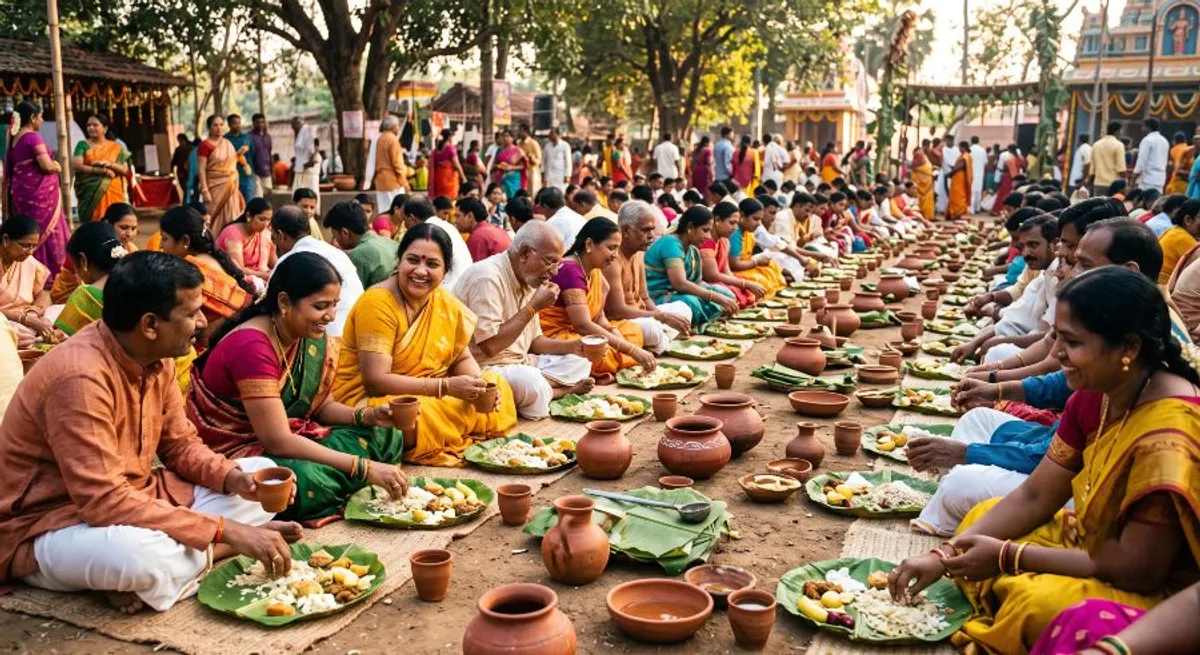
Picture the banks of the sacred Ganges on a warm summer day. Hundreds of devotees gather beneath the shade of an ancient banyan tree. Earthen pots filled with chipped rice, yogurt, milk, bananas, mangoes, and fragrant camphor are arranged in long rows. Joyful kirtana fills the air, laughter echoes among the assembled devotees, and an extraordinary spiritual event unfolds—one that would forever become part of Gaudiya Vaishnava history. Those who wish to explore the lives of Lord Chaitanya and His eternal associates often discover authentic scriptures and devotional items through the ISKCON Mayapur Online Store, helping preserve this timeless tradition for future generations.
Among the many pastimes connected with Sri Chaitanya Mahaprabhu, the Panihati Chida Dahi Festival occupies a unique place. It is neither centered on a grand temple ceremony nor marked by royal celebrations. Instead, its beauty lies in simplicity.
A humble meal.
A sincere servant.
A compassionate spiritual master.
And an act of mercy that changed one devotee's life forever.
Yet despite its profound significance, this pastime often receives far less attention than the famous Ratha Yatra, Gaura Purnima, or Janmashtami festivals.
That is unfortunate.
Because hidden within this joyful gathering is one of the clearest lessons about humility, service, surrender, and divine grace found anywhere in the Gaudiya tradition.
A Small Village That Became Sacred
The story begins in Panihati, a peaceful town situated along the eastern bank of the Ganges.
Today it lies within the greater Kolkata region, but during the sixteenth century it was already known as a place visited by devotees traveling throughout Bengal.
Its greatest spiritual treasure was not architecture.
It was association.
The village became sanctified because of the presence of Nityananda Prabhu, whose limitless compassion transformed countless lives.
Long before large festivals filled the riverbank, Panihati quietly witnessed one of the most meaningful meetings in Vaishnava history.
The Young Man Who Longed to Leave Everything Behind
At the center of this pastime stands Raghunatha Dasa Goswami.
Born into an immensely wealthy family, Raghunatha possessed everything society usually admires.
Luxury.
Influence.
Comfort.
Security.
His parents expected him to manage their prosperous estate and continue the family's respected position.
Outwardly, his future appeared perfect.
Inside, however, another desire had taken root.
He longed only to dedicate his life completely to Krishna and to serve Sri Chaitanya Mahaprabhu.
Again and again, he attempted to leave home.
Each time, his family stopped him.
Servants watched his movements.
Friends persuaded him to remain.
Relatives tightened their supervision.
The more they tried to bind him materially, the stronger his spiritual longing became.
This inner struggle makes Raghunatha's story deeply relatable.
Many sincere seekers experience tension between worldly responsibilities and spiritual aspirations.
His life reminds us that genuine devotion often grows quietly before becoming visible.
Lord Chaitanya's Unexpected Advice
Raghunatha once managed to meet Sri Chaitanya Mahaprabhu.
Naturally, he hoped the Lord would immediately tell him to renounce everything.
Instead, he received surprising instructions.
Sri Chaitanya advised him to return home.
Remain externally responsible.
Perform worldly duties without becoming internally attached.
Wait patiently.
When Krishna arranged the proper time, everything would unfold naturally.
These instructions reveal remarkable wisdom.
Spiritual maturity rarely develops through impulsive decisions.
Patience becomes part of devotion.
Rather than encouraging dramatic external change, Mahaprabhu emphasized inner transformation.
Those words remained deeply impressed within Raghunatha's heart.
The Mercy Waiting in Panihati
Some time later, Raghunatha learned that Nityananda Prabhu was staying in Panihati.
Immediately he understood.
If he wished to receive Sri Chaitanya Mahaprabhu's mercy, he first needed the blessings of Nityananda.
Filled with hope, he quietly traveled to Panihati.
Yet even after arriving, he hesitated.
He remained at a respectful distance.
His humility prevented him from approaching directly.
Nityananda Prabhu noticed him immediately.
Nothing escaped His compassionate vision.
Smiling broadly, He called Raghunatha forward.
What happened next became one of the most joyful moments in Gaudiya history.
"You Have Been Hiding Like a Thief"
When Raghunatha approached, Nityananda Prabhu greeted him with playful affection.
"You have been hiding from Me like a thief!"
His words were not spoken in anger.
They overflowed with humor and kindness.
Then came an unexpected instruction.
As punishment for hiding, Raghunatha was ordered to organize a grand feast for all the assembled devotees.
Imagine hearing such a sentence.
Not imprisonment.
Not criticism.
Not austerity.
A feast.
This playful "punishment" perfectly reflected Nityananda Prabhu's nature.
He transformed correction into celebration.
Service became the path to mercy.
Why Chida and Dahi?
The meal chosen for the festival was beautifully simple.
Chida means flattened or chipped rice.
Dahi means yogurt.
These ingredients were inexpensive, refreshing, and perfectly suited for Bengal's warm climate.
Raghunatha enthusiastically arranged enormous quantities of food.
Alongside chipped rice and yogurt came:
- Fresh milk.
- Thick cream.
- Bananas.
- Mangoes.
- Sandalwood.
- Camphor.
- Sugar.
- Sweets.
Hundreds of earthen pots were filled with carefully prepared offerings.
Some contained chipped rice mixed with yogurt.
Others combined chipped rice with sweetened milk.
Every preparation was made with devotion rather than extravagance.
The simplicity of the ingredients became one of the festival's greatest lessons.
Love transforms ordinary offerings into extraordinary service.
The Riverbank Filled With Devotees
News spread rapidly.
People from nearby villages hurried toward the Ganges.
Soon the riverbank overflowed with visitors eager to see Nityananda Prabhu and participate in the celebration.
The gathering grew so large that many devotees sat directly along the water's edge.
Others stood knee-deep in the Ganges while joyfully honoring prasadam.
No elaborate seating arrangements were needed.
No social hierarchy determined where someone could sit.
Everyone became united through devotional service.
Rich merchants.
Simple villagers.
Scholars.
Children.
Travelers.
All received the same joyful welcome.
This spirit reflected one of Sri Chaitanya Mahaprabhu's greatest teachings.
Before Krishna, every sincere soul deserves equal opportunity to receive mercy.
A Feast That Became a Spiritual Revolution
From an ordinary perspective, the event appeared to be a generous public meal.
Spiritually, something much greater was taking place.
Raghunatha was learning that genuine renunciation begins with service.
Instead of abandoning his wealth dramatically, he first offered it in Krishna's service.
His resources became instruments of compassion.
Rather than increasing personal comfort, they created happiness for countless devotees.
This shift in consciousness transformed everything.
The same wealth that once represented worldly attachment became an offering of devotion.
That lesson continues inspiring Vaishnavas today.
Material possessions are not automatically obstacles.
When used selflessly for Krishna's pleasure, they become powerful expressions of bhakti.
The Hidden Beginning of Raghunatha's Spiritual Destiny
The Panihati festival marked far more than a memorable gathering.
It became the turning point of Raghunatha Dasa's life.
The blessings received there prepared him for an extraordinary future.
Soon afterward, circumstances changed dramatically.
He successfully left home.
He reached Jagannath Puri.
There he received the personal association of Sri Chaitanya Mahaprabhu, eventually becoming one of the greatest teachers in the Gaudiya Vaishnava tradition.
Looking back, the feast of chipped rice and yogurt appears wonderfully simple.
Yet within that simplicity lay the beginning of one of the most influential spiritual journeys in Vaishnava history.
The Panihati Chida Dahi Festival reminds every devotee that divine mercy often arrives through humble acts of service, quiet obedience, and heartfelt generosity rather than dramatic displays of renunciation.
The Moment Everyone Remembered Forever
As hundreds of devotees joyfully honored the chipped rice preparations, an extraordinary event unfolded.
Nityananda Prabhu walked among the assembled devotees with great happiness, personally encouraging everyone to accept prasadam.
Then, according to the Gaudiya Vaishnava tradition, something invisible to most people became visible to a fortunate few.
Sri Chaitanya Mahaprabhu mysteriously appeared.
Although He was physically residing in Jagannath Puri, advanced devotees witnessed Him participating in the festival beside Nityananda Prabhu.
The two Lords accepted chipped rice together.
They smiled.
They blessed the devotees.
They filled the atmosphere with divine joy.
Most participants remained unaware of this extraordinary manifestation.
Only those blessed with spiritual vision could recognize what had happened.
This beautiful detail reveals an important truth.
The Lord's presence is not always perceived through ordinary eyes.
It is revealed through devotion.
Why Chipped Rice and Yogurt Carry Such Deep Meaning
At first glance, chipped rice and yogurt appear to be remarkably ordinary foods.
There is nothing luxurious about them.
No elaborate cooking techniques.
No expensive ingredients.
Yet that simplicity carries profound significance.
Throughout Vaishnava history, Krishna repeatedly demonstrates that He values the love behind an offering more than its market value.
A handful of chipped rice offered with devotion becomes spiritually priceless.
This principle appears again and again in scripture.
The Lord accepted:
- Fruits from Shabari.
- Flattened rice from Sudama.
- A leaf, flower, fruit, or water offered with love.
- Chida and dahi prepared by Raghunatha Dasa.
The pattern remains beautifully consistent.
Krishna never measures devotion by external appearance.
He looks directly at the heart.
Service Became Raghunatha's Real Initiation
Many people imagine that spiritual advancement begins with formal ceremonies.
The Panihati festival teaches another perspective.
Raghunatha Dasa's transformation began through service.
Notice what Nityananda Prabhu did not ask him to do.
He did not request years of difficult austerities.
He did not assign complicated philosophical debates.
He did not tell him to abandon society immediately.
Instead, He asked him to feed devotees.
That simple instruction became life-changing.
Through serving others, Raghunatha's heart became fully prepared to receive the direct association of Sri Chaitanya Mahaprabhu.
This remains one of the central teachings of Gaudiya Vaishnavism.
Service purifies consciousness.
Knowledge becomes meaningful when expressed through loving action.
The Banyan Tree That Became a Sacred Landmark
The Panihati pastime took place beneath a large banyan tree along the bank of the Ganges.
Over the centuries, this location has become one of the cherished pilgrimage sites for Gaudiya Vaishnavas.
Pilgrims visit not merely because of its historical importance.
They come to remember the mood displayed there.
Humility.
Generosity.
Joyful service.
Dependence upon divine mercy.
Sacred places become holy because of the Lord's pastimes and the devotion of His associates.
The Panihati banyan tree continues reminding visitors that even an ordinary riverside gathering can become eternally significant when centered on Krishna.
Mercy Before Qualification
One of the most encouraging aspects of this pastime is the way Nityananda Prabhu treated Raghunatha.
Raghunatha already possessed deep spiritual longing.
Still, he considered himself unqualified.
He approached from a distance.
He waited patiently.
He did not demand recognition.
Nityananda Prabhu responded with affection rather than formality.
This interaction beautifully illustrates the nature of divine mercy.
It is never purchased.
Never demanded.
Never earned through pride.
Mercy flows most naturally toward sincere humility.
For modern devotees, this lesson remains deeply reassuring.
Krishna consciousness does not begin with perfection.
It begins with honest sincerity.
The Festival That Broke Social Barriers
The Panihati Chida Dahi Festival also reflected one of the defining characteristics of Sri Chaitanya Mahaprabhu's movement.
Inclusiveness.
During the feast, distinctions of wealth, education, and social standing quietly faded away.
Everyone honored the same prasadam.
Everyone participated in the same kirtana.
Everyone received the same opportunity for spiritual association.
This was revolutionary for its time.
The festival demonstrated that devotion belongs to every soul.
Not merely scholars.
Not only ascetics.
Not exclusively the wealthy.
The mercy distributed through the holy names and prasadam reaches beyond material labels.
That universal spirit continues attracting people to Gaudiya Vaishnavism today.
Why Nityananda's "Punishment" Was Actually a Blessing
The playful "punishment" given to Raghunatha deserves careful reflection.
On the surface, it sounded humorous.
"You must feed all these devotees."
Spiritually, however, Nityananda Prabhu was offering something priceless.
He was giving Raghunatha an opportunity to serve.
In devotional life, service is never a burden.
It is the doorway to deeper realization.
Many experienced devotees eventually discover this truth.
Real happiness rarely comes from being served.
It comes from serving others with affection.
That is why the Panihati pastime continues inspiring devotees centuries later.
Its central lesson remains timeless.
Service offered with humility attracts extraordinary mercy.
A Hidden Lesson About Wealth
Raghunatha Dasa came from extraordinary material prosperity.
His wealth could easily have become a source of pride.
Instead, under Nityananda Prabhu's guidance, it became an instrument of compassion.
This distinction is important.
Vaishnava philosophy does not automatically condemn material resources.
Rather, it asks one simple question.
How are they being used?
Money spent only for personal enjoyment often strengthens attachment.
The same resources offered in Krishna's service become spiritually meaningful.
Raghunatha's feast demonstrates that transformation beautifully.
His generosity nourished both bodies and souls.
Why This Festival Is Still Celebrated
Every year, devotees continue gathering in Panihati and many ISKCON temples around the world to remember this extraordinary pastime.
The menu remains beautifully familiar.
Chipped rice.
Yogurt.
Milk.
Fresh fruit.
Sweets.
Kirtana fills the air just as it did centuries ago.
The celebration is not an attempt to recreate history perfectly.
It is an opportunity to relive its mood.
Participants remember:
- Nityananda Prabhu's limitless compassion.
- Raghunatha Dasa's humility.
- Sri Chaitanya Mahaprabhu's hidden presence.
- The transforming power of selfless service.
Each celebration reminds devotees that the path of bhakti grows through simple offerings made with extraordinary love.
The Festival Is Really About the Heart
Looking only at external events, the Panihati Chida Dahi Festival appears to be a successful community feast.
Looking deeper reveals something far greater.
A proud heart became humble.
A wealthy young man became a servant.
A simple meal became an offering of divine love.
An ordinary riverside gathering became an eternal spiritual celebration.
That transformation explains why this pastime continues to hold such an honored place within the Gaudiya Vaishnava tradition.
Its greatest miracle was never the quantity of food served.
It was the awakening of devotion within one sincere heart—a transformation that would later bless generations of devotees through the life and teachings of Raghunatha Dasa Goswami.
Why This Festival Still Matters Today
At first glance, the Panihati Chida Dahi Festival may appear to belong to another era.
A riverside gathering.
Simple food served in clay pots.
Devotees sitting beneath a banyan tree.
Yet its message feels remarkably fresh.
Modern society often celebrates personal achievement, recognition, and accumulation.
The Panihati festival points in another direction.
It teaches that real fulfillment grows through humility, generosity, and joyful service.
Raghunatha Dasa did not become spiritually successful because of his wealth.
He became successful because he placed everything he possessed at the service of Krishna and His devotees.
That lesson has lost none of its relevance.
Whether someone has abundant resources or very little, everyone can cultivate the same spirit of offering.
Panihati and the Living Tradition of Gaudiya Vaishnavism
The Panihati Chida Dahi Festival is not merely remembered through books.
It continues to live in the devotional practices of Gaudiya Vaishnavas.
Each year, devotees gather in Panihati to commemorate this sacred pastime.
The banks of the Ganges once again fill with kirtana.
Preparations of chipped rice mixed with yogurt, milk, fruits, and sweets are lovingly offered and distributed.
Pilgrims hear narrations about the meeting between Nityananda Prabhu and Raghunatha Dasa Goswami.
The atmosphere remains wonderfully joyful.
Children participate.
Families gather.
Visitors from around the world join the celebration.
The festival continues to unite people through prasadam, kirtana, and remembrance of Lord Chaitanya's mercy.
How ISKCON Helped Share This Festival Worldwide
For many centuries, the Panihati Festival was primarily known within Bengal.
Its message gradually reached a global audience through the efforts of A. C. Bhaktivedanta Swami Prabhupada.
By translating Gaudiya scriptures and establishing temples across the world, he introduced devotees everywhere to the beautiful pastimes of Lord Chaitanya and His eternal associates.
Today, many ISKCON temples celebrate Panihati Chida Dahi Mahotsava annually.
Although participants may live thousands of miles from Bengal, they gather with the same devotional mood.
Simple chipped rice preparations are offered.
The story is narrated.
Devotees sing together.
Prasadam is distributed freely.
This continuity reflects one of the greatest strengths of the Gaudiya tradition.
Its essence can flourish in any country because it depends upon devotion rather than geography.
The Hidden Connection Between Panihati and Vrindavan
One remarkable aspect of this pastime often goes unnoticed.
Without Panihati, the future of Gaudiya Vaishnava literature might have looked very different.
After receiving Nityananda Prabhu's blessings, Raghunatha Dasa eventually reached Jagannath Puri, where he spent many years serving Sri Chaitanya Mahaprabhu.
Later, he settled in Vrindavan as one of the renowned Six Goswamis.
His life of renunciation, scholarship, and devotion profoundly influenced future generations.
Many treasured teachings of Gaudiya Vaishnavism have been preserved because of the spiritual foundation established through the mercy he received at Panihati.
A seemingly simple feast quietly shaped the future of an entire devotional tradition.
Five Lessons Every Devotee Can Learn from Panihati
The Panihati pastime continues to guide spiritual seekers because its lessons remain timeless.
1. Humility Opens the Door to Mercy
Raghunatha Dasa never demanded attention.
He approached from a distance, considering himself unworthy.
That humility attracted Nityananda Prabhu's affection.
Spiritual progress begins when pride gives way to sincerity.
2. Service Comes Before Renunciation
Many people imagine that spiritual advancement starts by giving things up.
Nityananda Prabhu taught something different.
First learn to serve.
When service becomes natural, renunciation follows effortlessly.
3. Simplicity Can Carry Extraordinary Spiritual Power
The festival centered on chipped rice and yogurt.
Nothing extravagant.
Yet generations still remember it because love transformed ordinary food into sacred prasadam.
4. Wealth Becomes Beautiful When Shared
Raghunatha used his resources to nourish devotees.
His generosity became an offering rather than a display of prosperity.
The principle remains relevant for everyone today.
5. Krishna's Mercy Often Arrives Through His Devotees
Raghunatha longed to meet Sri Chaitanya Mahaprabhu.
Nityananda Prabhu became the bridge.
This teaches an important truth.
Association with genuine devotees often becomes the pathway through which Krishna's mercy reaches us.
Bringing the Mood of Panihati Into Everyday Life
Most people cannot organize a festival for thousands.
That is not necessary.
The heart of Panihati can be practiced in simple ways.
You can:
- Offer food to Krishna before eating.
- Share prasadam with family, friends, or neighbors.
- Welcome guests warmly.
- Support temple festivals.
- Volunteer in devotional service.
- Read about the lives of Lord Chaitanya's associates.
- Encourage others through kindness and compassion.
These small acts reflect the same spirit that inspired the original festival.
Devotion grows through consistent service rather than dramatic gestures.
A Festival That Continues to Feed the Soul
The Panihati Chida Dahi Festival reminds us that the most memorable moments in spiritual history are not always marked by royal ceremonies or spectacular miracles.
Sometimes they unfold beneath the shade of a tree.
Sometimes they begin with a bowl of chipped rice.
Sometimes they grow from one devotee's humble desire to serve.
That simplicity is precisely what makes this pastime so extraordinary.
The festival celebrates a kind of wealth that never diminishes.
The wealth of humility.
The wealth of service.
The wealth of association with pure devotees.
These treasures remain available to every sincere seeker, regardless of background or circumstance.
Frequently Asked Questions
What is the Panihati Chida Dahi Festival?
It is a famous Gaudiya Vaishnava festival commemorating the pastime in which Nityananda Prabhu instructed Raghunatha Dasa Goswami to organize a grand feast of chipped rice and yogurt for the devotees.
Why is chipped rice used?
Chipped rice is simple, nourishing, and symbolizes humble devotional service. The festival teaches that Krishna values the love behind an offering more than its material cost.
Where is the festival celebrated?
The principal celebration takes place in Panihati, while many ISKCON temples and Gaudiya Vaishnava communities around the world also observe it each year.
Why is Raghunatha Dasa Goswami important?
He later became one of the Six Goswamis of Vrindavan and played a major role in preserving the teachings and devotional practices of Sri Chaitanya Mahaprabhu.
Final Thoughts
The Panihati Chida Dahi Festival stands as one of the most heartwarming and instructive pastimes in the Gaudiya Vaishnava tradition. Through a playful instruction from Nityananda Prabhu, an ordinary meal became an eternal lesson in humility, generosity, and devotional service.
Raghunatha Dasa Goswami's life reminds us that genuine spiritual advancement begins not with dramatic renunciation but with a sincere willingness to serve. His obedience, patience, and selfless offering opened the door to the mercy that ultimately shaped the future of Gaudiya Vaishnavism.
Every bowl of chipped rice distributed during the festival carries the memory of that sacred day on the banks of the Ganges. More importantly, it carries a timeless invitation.
Serve with humility.
Share with joy.
Seek the blessings of great devotees.
And trust that even the simplest offering, when made with genuine love for Krishna, can become the beginning of a lifelong spiritual journey.