Digital Transformation Revolutionizing the Knitting Industry
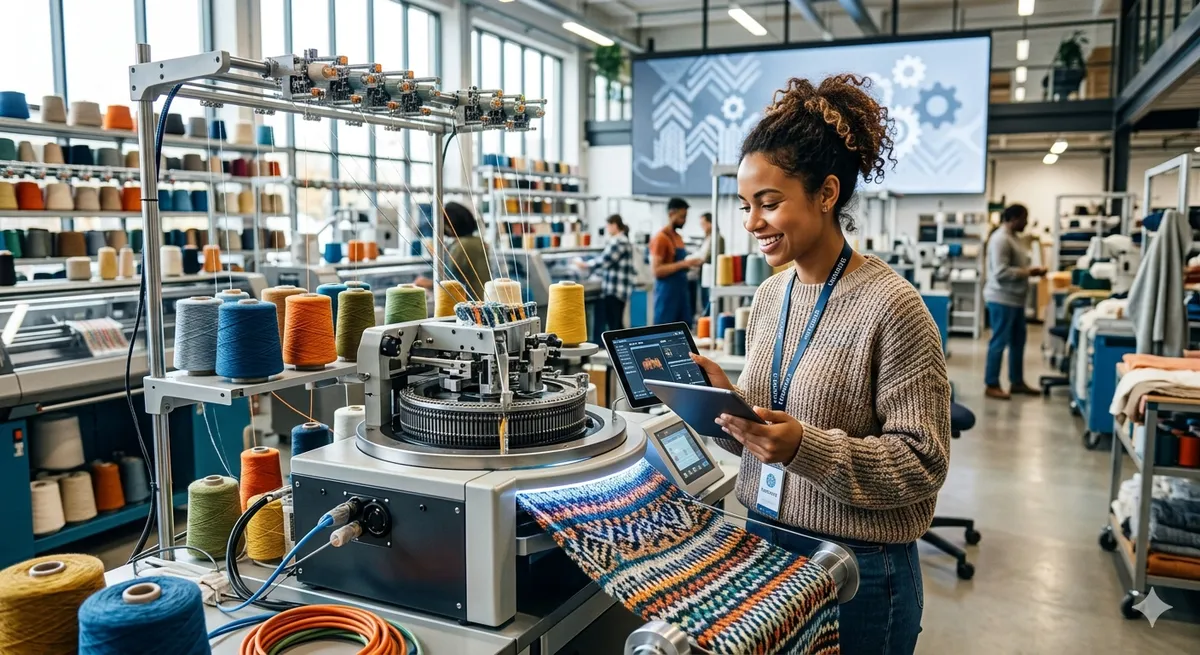
The Knitting Industry is undergoing a digital revolution with manufacturers adopting modern technology to boost productivity, quality and sustainability. There are traditional and advanced systems of knitting, where traditional knitting has been replaced by advanced computerized knitting systems that result in faster production and higher design flexibility.
Automation has been one of the most significant advancements in Knitting Industry. Automated knitting machines can be used to create intricate patterns with great precision and decrease the reliance on manual labor. This will reduce manufacturing expenses and increase efficiency. The modern technology of the factories can also be able to cater to the large-scale production demands in a better manner.
The other major trend is smart manufacturing. Today, many textile companies implement systems that allow them to track machine performance, yarn consumption and product quality in real-time using data. These systems minimise material wastage and allow for better operational control.
The growth of e-commerce has also had an impact on the Knitting Industry. Today, people shop online and manufacturers and brands are developing online marketplaces and catalogs. This change has presented new possibilities for companies to connect with customers around the world directly.
Another motivator for digital transformation is sustainability. Use of energy efficient machines and recycled yarns, eco-friendly production methods are gaining popularity. Digital knitting technology enables manufacturers to make the best use of resources and minimize the impact they have on the environment.
Despite all these developments, the industry continues to have its share of problems including high cost of machines and qualified operators. But businesses who have invested in innovation will be competitive in the future textile market.
In conclusion, digital transformation has emerged as a pivotal force in the Knitting Industry's future, offering a range of benefits that include efficiencies, sustainability, and product innovation.