Why Interlocking Nail Systems Are Preferred for Femur and Tibia Fractures?
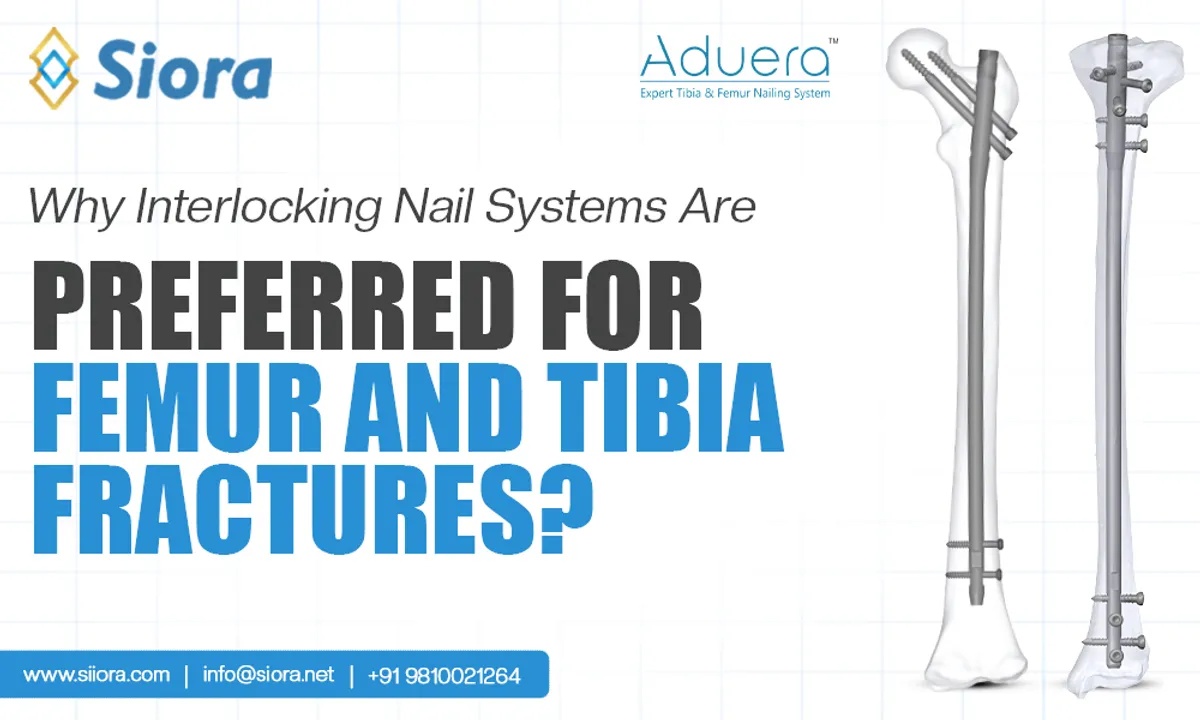
Treatment of long bone fractures of the femur and tibia has changed significantly over the years. Today, interlocking nail systems are considered one of the most dependable options for fracture fixation. Their ability to provide stability while allowing early movement has made them widely preferred among orthopedic surgeons. Whether it is a high-energy trauma case or a fracture in osteoporotic bone, these systems often offer predictable outcomes. A Tibial Intramedullary Nail is commonly used in modern orthopedic procedures because it supports alignment and healing without extensive soft tissue disruption.
Understanding Interlocking Nail Systems
Interlocking nails are metal rods placed inside the medullary canal of long bones. Unlike traditional nails, these implants are fixed with locking screws at both ends. The screws prevent rotation and shortening of the fractured bone, helping maintain proper alignment throughout the healing period.
This design gives the fixation better control, especially in unstable fractures where simple nailing may not be enough.
Better Stability in Complex Fractures
One of the biggest reasons surgeons prefer interlocking nail systems is the level of stability they provide. Femur and tibia fractures are often caused by road accidents, sports injuries, or falls from height. In many cases, the fracture pattern is complex or comminuted.
Interlocking screws hold the nail firmly in place and reduce the chances of displacement. Even when the bone is broken into multiple fragments, the system helps maintain length and alignment. This stability plays an important role in proper healing.
Smaller Incisions and Less Tissue Damage
Compared to plating procedures, interlocking nailing usually requires smaller incisions. Since the implant is inserted through the medullary canal, there is less stripping of muscles and surrounding soft tissues.
Preserving soft tissue is important because it protects the blood supply around the fracture site. Good blood circulation supports faster and healthier bone healing. Patients also tend to experience less postoperative pain and swelling after minimally invasive fixation.
Early Weight Bearing and Faster Recovery
Another major advantage of interlocking nail systems is early mobilization. Because the fixation is stable, patients can often begin controlled movement sooner than with some other treatment methods.
Early rehabilitation helps reduce stiffness, muscle wasting, and complications related to prolonged bed rest. In tibial and femoral fractures, restoring mobility as early as possible is important for overall recovery and patient confidence.
Useful in Both Femur and Tibia Fractures
Interlocking nail systems work well for fractures involving both the femur and tibia. In femoral shaft fractures, they provide strong fixation capable of handling high mechanical loads. In tibial fractures, especially shaft fractures, they help maintain alignment while preserving surrounding tissues.
These systems are also useful in cases involving osteoporosis, segmental fractures, and fractures with delayed healing risk.
Reduced Chances of Malalignment
Maintaining proper bone alignment is one of the main goals of fracture treatment. Improper alignment can affect walking, limb function, and long-term patient comfort.
Because interlocking nails are secured at both ends, they reduce rotational and angular deformities. This improves the chances of achieving proper union and functional recovery.
Conclusion
Interlocking nail systems have become a preferred choice for managing femur and tibia fractures because they combine stability, minimally invasive fixation, and reliable healing support. Their ability to maintain alignment while allowing early rehabilitation makes them highly effective in modern orthopedic surgery. For both surgeons and patients, these systems offer practical advantages that contribute to better recovery and long-term outcomes.
To explore or get advanced interlocking nailing systems and other cutting-edge trauma implants, visit Siora Surgicals Pvt. Ltd., a renowned orthopedic manufacturer, at the SAOA conference 2026, at booth no. 01.