Advances in Maxillofacial Fixation: From Non-Locking to Locking Plate Technology
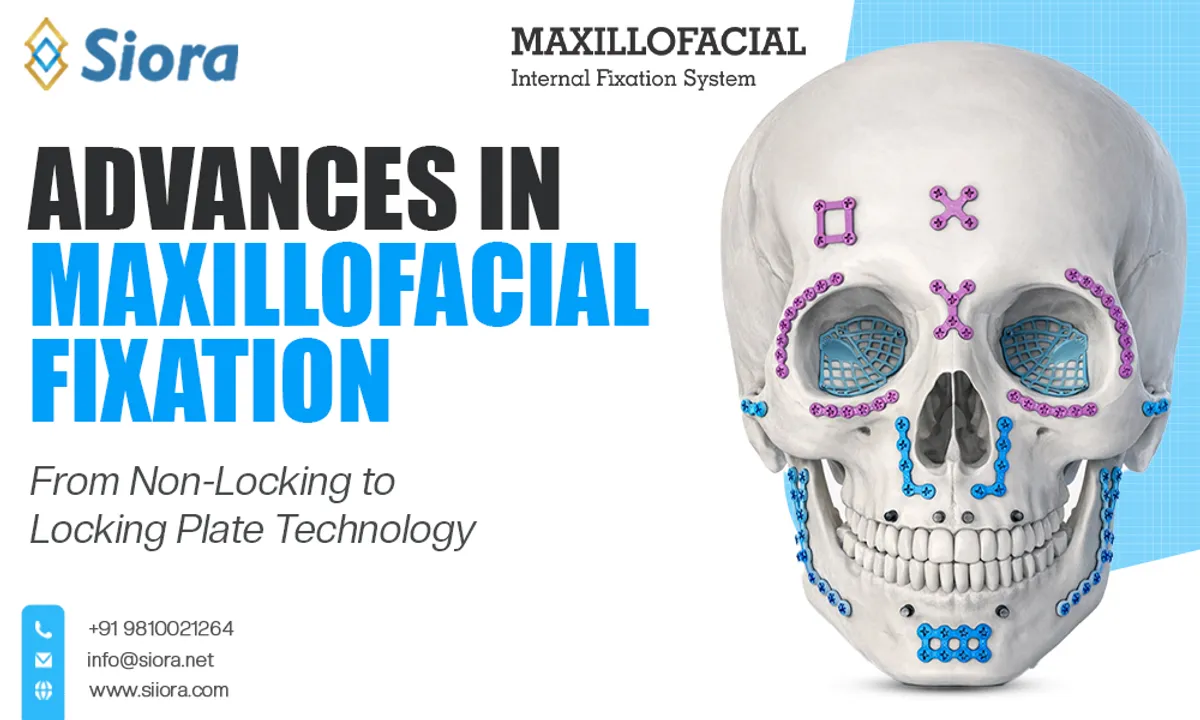
Maxillofacial fractures are among the most delicate injuries treated in orthopedic and trauma surgery. Since the facial skeleton plays an important role in speech, chewing, breathing, and appearance, stable fixation is essential for proper healing and function. Over the years, fixation techniques used in maxillofacial surgery have changed significantly. One of the biggest developments has been the shift from traditional non-locking maxillofacial plates to modern locking plate systems.
This advancement has improved fracture stability, reduced complications, and made surgical outcomes more predictable in many cases.
Early Use of Non-Locking Plate Systems
For many years, non-locking plates were widely used for maxillofacial fracture fixation. These plates depended mainly on friction between the plate and bone to maintain stability. In this system, screws compressed the plate tightly against the bone surface, helping keep fracture fragments in position.
Although effective in many cases, non-locking plates had certain limitations. Precise plate adaptation was extremely important because even slight gaps between the plate and bone could reduce fixation strength. Excessive tightening of screws could also affect the blood supply to the underlying bone.
In fractures involving thin bone or comminuted fragments, maintaining stable fixation sometimes became difficult with conventional systems.
Introduction of Locking Plate Technology
Locking plate systems were developed to overcome many of the problems seen with traditional fixation methods. In locking systems, the screw head locks directly into the plate hole, creating a fixed-angle construct. Instead of relying only on compression between plate and bone, the stability comes from the mechanical connection between the screw and plate.
This design changed the way surgeons approached maxillofacial fixation. The plate no longer needed to be perfectly compressed against the bone surface to provide stability.
Better Stability and Reduced Screw Loosening
One of the major advantages of locking plates is improved stability. Because the screws lock into the plate, the construct behaves like a single unit. This helps maintain fracture alignment even in cases with weak or osteoporotic bone.
Locking systems also reduce the chances of screw loosening. In non-locking plates, repeated stress or poor bone quality could gradually loosen screws over time. Locking constructs are more resistant to these problems, especially in complex facial fractures.
Improved Blood Supply Around the Fracture
Another important benefit of locking plate technology is reduced disruption to the bone’s blood supply. Since the plate does not need to be tightly compressed against the bone, there is less pressure on the periosteum. Preserving blood circulation around the fracture site supports better healing and lowers the risk of complications.
This advantage becomes particularly important in mandibular fractures, comminuted injuries, and reconstructive procedures where maintaining bone vitality is critical.
Applications in Modern Maxillofacial Surgery
Today, locking plates are commonly used in various maxillofacial procedures, including mandibular fractures, midface trauma, orthognathic surgery, and reconstructive surgeries. Their ability to provide stable fixation while preserving surrounding tissues has made them increasingly popular among surgeons.
Modern locking systems are also available in low-profile designs, which improve patient comfort and reduce implant prominence beneath facial soft tissues.
Are Non-Locking Plates Still Useful?
Despite the advantages of locking systems, non-locking plates still have a role in certain situations. They are often more affordable and may work well in simple fractures with good bone quality. Many surgeons continue to use them successfully in selected cases.
The choice between locking and non-locking systems usually depends on fracture complexity, patient condition, bone quality, and surgeon preference.
Conclusion
The transition from non-locking to locking plate technology represents a major advancement in maxillofacial fixation. Locking systems have improved stability, protected blood supply, and reduced hardware-related complications in many challenging cases. While traditional orthopedic implant plates remain useful in some situations, locking plate technology has become an important part of modern maxillofacial surgery due to its reliability and predictable clinical performance.