Choosing the Right Femur Nail: Benefits of Titanium Implants
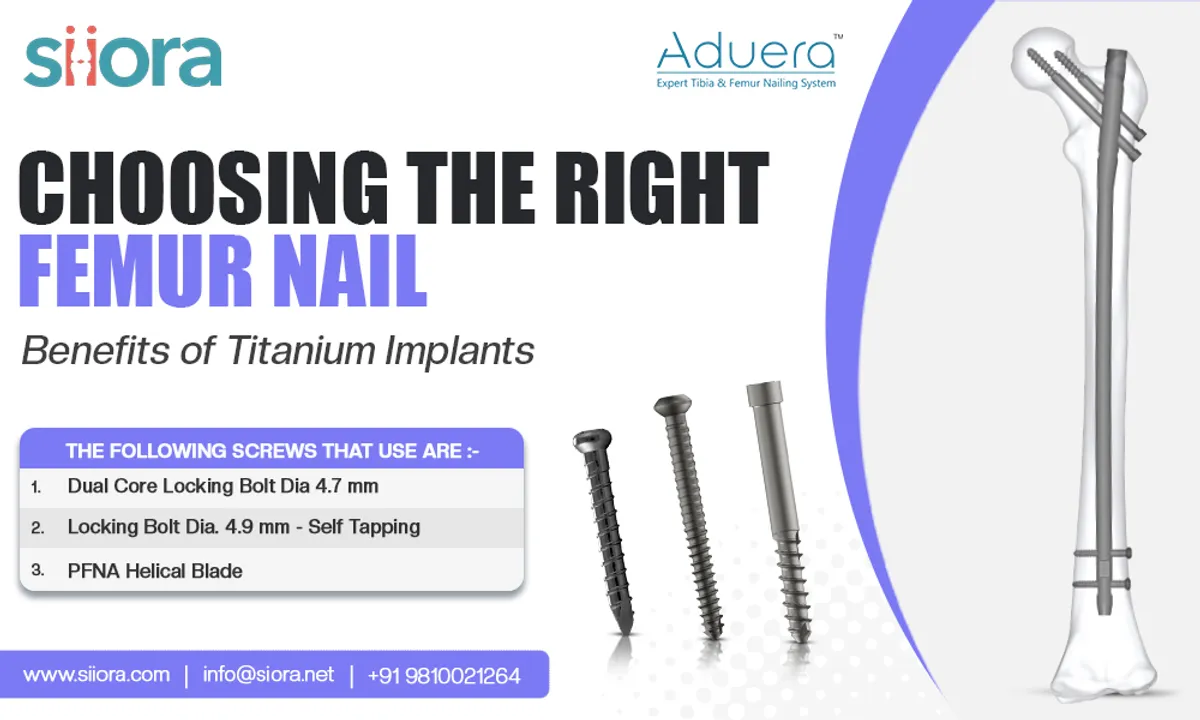
Femoral fractures are among the most serious long-bone injuries treated by orthopedic surgeons. Because the femur carries the body’s weight and plays a major role in mobility, stable fixation is essential for proper healing and early rehabilitation. Intramedullary femur nails have become a widely accepted solution for these fractures. While selecting an expert femur nail, surgeons often consider several factors such as fracture type, implant design, and the material used. In recent years, titanium implants have gained popularity for femoral nailing because they offer certain practical advantages compared to traditional materials.
Understanding Femur Nailing
Intramedullary femur nails are placed inside the medullary canal of the femur to stabilize fractured bone segments. This method allows the implant to align with the natural axis of the bone, helping distribute forces more evenly during movement. As a result, patients can often begin controlled weight-bearing earlier than with some other fixation methods.
The design of the nail is important, but the material also plays a significant role in how the implant behaves once it is inside the body. This is where titanium implants stand out.
Why is Titanium Commonly Preferred?
Titanium has become a preferred material in many orthopedic implants due to its favorable mechanical and biological properties. One of its key advantages is that it is lighter than stainless steel while still providing sufficient strength for fracture stabilization. The reduced weight may not seem dramatic, but it contributes to better overall implant balance within the bone.
Another important factor is flexibility. Titanium has an elastic modulus closer to that of natural bone. This means the implant and bone can share mechanical load more naturally, rather than the implant taking most of the stress.
Support for Natural Bone Healing
Bone healing depends not only on stability but also on biological response. Titanium femur nails allow small amounts of controlled micro-movement at the fracture site. These tiny movements stimulate callus formation, which is an essential part of the bone healing process.
Because titanium is less rigid than some other materials, it helps reduce the chances of stress shielding. Stress shielding occurs when the implant carries too much load and the surrounding bone becomes weaker over time. By allowing better load sharing, titanium supports more natural bone recovery.
Biocompatibility and Tissue Response
Another reason titanium is widely used in orthopedic implants is its excellent biocompatibility. Titanium forms a thin protective oxide layer on its surface, which helps prevent corrosion and reduces the risk of reactions within the body.
Most patients tolerate titanium implants very well, even when they remain in place for long periods. This makes titanium femur nails suitable for a wide range of patients, including those who may require long-term implant retention.
Advantages During Follow-Up Imaging
Postoperative imaging is an important part of fracture management. Titanium trauma implants tend to produce fewer imaging artifacts compared to some other metallic implants. This allows surgeons to evaluate fracture healing more clearly through X-rays, CT scans, or MRI when necessary.
Clearer imaging helps in assessing union progress and identifying any complications early.
Conclusion
Choosing the right femur nail involves more than selecting the correct size or design. The implant material also plays an important role in patient outcomes. Titanium femur nails offer several advantages, including lighter weight, better load sharing, improved biocompatibility, and clearer postoperative imaging. These features support natural bone healing and long-term patient comfort. For many orthopedic surgeons, titanium implants have therefore become a dependable choice when treating femoral fractures.